
Page Navigation
Immerse yourself in the serene beauty of the water while engaging your core muscles through the increasingly popular activity of stand-up paddleboarding. This invigorating water workout allows you to glide across the surface with grace and ease, all while toning your abs, back, and glutes. Experience the gentle rhythm of the paddle strokes and the calming sensation of being surrounded by nature, as you strengthen your body and discover a new way to connect with the water. Dive into the world of stand-up paddleboarding and unlock the potential of an extraordinary fitness journey.
Benefits of Stand-Up Paddleboarding
1.1 Full-body workout
Stand-up paddleboarding (SUP) is an incredible way to engage your entire body and get a full-body workout. As you paddle, you target muscles in your arms, shoulders, and back, giving them a great workout. The repetitive paddling motions also engage your core muscles, including your abs and obliques, as you stabilize yourself on the board. Additionally, your legs and glutes work to maintain balance and stability on the water. This combination of upper body, core, and lower body engagement makes stand-up paddleboarding an excellent activity to strengthen and tone your entire body.
1.2 Cardiovascular fitness
In addition to being a fantastic workout for your muscles, stand-up paddleboarding also provides an excellent cardiovascular workout. The continuous paddling and movement through the water elevate your heart rate, helping to improve your cardiovascular fitness. Whether you’re leisurely cruising along the coast or pushing yourself in a more intense paddleboarding session, you’ll be giving your cardiovascular system a boost.
1.3 Low-impact exercise
One of the great things about stand-up paddleboarding is that it is a low-impact exercise. Unlike activities such as running or jumping, SUP puts minimal stress on your joints. The buoyancy of the water cushions the impact of each stroke, reducing the risk of injury. This makes paddleboarding an ideal workout option for individuals with joint concerns or those recovering from injuries. You can still get an effective workout without straining your body.
1.4 Stress reduction
Stand-up paddleboarding provides an excellent opportunity to escape the stress of daily life and connect with nature. The soothing sound of water, the fresh air, and the beautiful scenery can help calm your mind and reduce stress levels. Engaging in paddleboarding also releases endorphins, which are natural mood boosters. The combination of physical activity, tranquility, and the beauty of your surroundings creates a serene environment for stress reduction and mental well-being.
Engaging the Core Muscles
2.1 Importance of core strength
Having a strong core is essential for overall fitness and functionality. Your core muscles provide stability, balance, and power for almost every movement your body makes. From bending and lifting to maintaining posture and stability, a strong core is key. Engaging in activities that target and strengthen your core muscles, such as stand-up paddleboarding, can improve your overall fitness and day-to-day functioning.
2.2 Core muscles used in paddleboarding
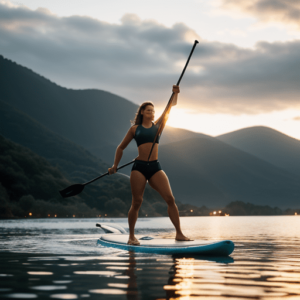
Stand-up paddleboarding is a fantastic way to engage and strengthen your core muscles. Every stroke you take requires your core muscles to stabilize and generate power. Your abdominal muscles, such as the rectus abdominis and obliques, are primarily engaged to maintain balance and support your body on the board. Additionally, your lower back muscles, including the erector spinae, work to keep your torso upright and aligned. Engaging these core muscles during paddleboarding not only improves your balance and stability but also helps to tone and strengthen your midsection.
2.3 Enhancing balance and stability
Stand-up paddleboarding challenges your balance and stability in a unique way. As you paddle on the water, your body must constantly adjust and adapt to the movement of the board and the water currents. This constant adjustment requires your core muscles to work overtime to keep you balanced and stable. Over time, as you continue to paddleboard, you’ll notice an improvement in your balance and stability, both on and off the water. Developing these skills can have significant benefits in other areas of your life, such as sports performance or even preventing falls as you age.
Techniques and Equipment
3.1 Paddleboarding stance
Proper paddleboarding stance is crucial for maintaining balance and efficiency on the water. Begin by standing in the center of the board with your feet parallel and shoulder-width apart. Keep your knees slightly bent, allowing for better stability. Engage your core muscles to maintain an upright posture and distribute your weight evenly on the board. It’s important to maintain a relaxed stance and avoid tensing up, as this can interfere with your balance and control.
3.2 Paddleboarding strokes
There are several paddleboarding strokes that you can incorporate into your workout to maximize your efficiency and control. The forward stroke is the most common and involves inserting the paddle into the water at the front of the board and pulling it towards the tail in a straight line. The reverse stroke is used to slow down or stop, and it involves pushing the paddle towards the front of the board. The sweep stroke is useful for turning or changing direction. By angling the paddle at the front of the board and sweeping it towards the tail, you can guide the board in the desired direction. Learning and mastering these various paddleboarding strokes will enhance your overall experience and control on the water.
3.3 Choosing the right paddleboard
Selecting the right paddleboard is essential for your comfort and enjoyment while paddleboarding. Factors such as your skill level, body weight, and intended usage should be considered when choosing a paddleboard. Beginner-friendly paddleboards are typically wider and more stable, making them ideal for those new to the sport. More experienced paddlers may opt for narrower boards designed for speed and maneuverability. Additionally, the length of the board will depend on your intended usage, with longer boards being better suited for long-distance paddling and shorter boards for maneuverability and waves. Consulting with a knowledgeable paddleboard supplier or instructor can help you choose the right board for your specific needs.
3.4 Safety gear and accessories
Safety should always be a priority when engaging in stand-up paddleboarding. A personal flotation device (PFD), such as a life jacket, should be worn at all times, even if you are a strong swimmer. In the event of an unexpected fall or accident, a PFD can potentially save your life. Additionally, using a leash to secure yourself to the board is crucial, especially in windy or choppy conditions. A leash ensures that you remain connected to the board and prevents it from drifting away from you. Other accessories, such as sun protection (hat, sunglasses, and sunscreen), proper footwear, and a whistle for signaling, can also enhance your safety and overall paddleboarding experience.
Paddleboarding for Beginners
4.1 Learning the basics of stand-up paddleboarding
If you’re new to stand-up paddleboarding, it’s important to start by learning the basics. Taking lessons from a qualified instructor is highly recommended, as they can teach you proper paddling techniques, safety protocols, and help you develop good habits from the beginning. Learning the correct stance, paddle strokes, and balance techniques will set a strong foundation for your paddleboarding journey. By investing time in proper instruction, you’ll be able to progress effectively and avoid developing bad habits or potential injuries.
4.2 Building strength and endurance
As a beginner, it’s important to focus on building your strength and endurance gradually. Start with shorter paddleboarding sessions and gradually increase the duration and intensity as your fitness improves. This gradual progression will allow your body to adapt and minimize the risk of strain or injury. Be patient with yourself and listen to your body’s signals. Consistency and perseverance will help you build the strength and endurance required to take on more advanced paddleboarding challenges.
4.3 Gradually increasing difficulty
Once you feel comfortable with the basics of stand-up paddleboarding, you can begin to challenge yourself by exploring different environments and conditions. Try paddleboarding in calm, flatwater settings before progressing to more challenging conditions, such as waves or whitewater. Increasing the difficulty gradually will allow your skills to develop organically and help you avoid overwhelming yourself. Always prioritize your safety and seek guidance from experienced paddlers or instructors when entering new environments or attempting advanced techniques.
Advanced Paddleboarding Skills
5.1 Turning and maneuvering techniques
As you gain experience and confidence in your paddleboarding abilities, you can begin to explore advanced turning and maneuvering techniques. Sweeping strokes, back paddling, and pivot turns are some techniques that can help you navigate and change direction more effectively. Mastering these techniques will allow you to handle different water conditions and enjoy a greater sense of control and fluidity on the water.
5.2 Riding waves and whitewater
For those seeking an adrenaline rush, paddleboarding can also be taken to the waves and whitewater. Riding waves on a paddleboard requires an understanding of wave dynamics and timing, as well as proper paddle technique and balance. Similarly, navigating whitewater rapids involves specific skills and knowledge to safely navigate turbulent waters. Advanced paddleboarding skills, along with experience and guidance from experienced paddlers, are necessary for tackling waves and whitewater.
5.3 Racing and long-distance paddling
For paddlers looking for a competitive edge, stand-up paddleboarding offers opportunities for racing and long-distance paddling. From local club races to international competitions, there is a vibrant paddleboarding racing community. Long-distance paddling challenges endurance, mental fortitude, and navigation skills as you embark on journeys across lakes, rivers, or coastlines. Engaging in these advanced paddleboarding activities can push your limits, provide opportunities for personal growth, and connect you with a passionate community of like-minded individuals.
Stand-Up Paddleboarding as a Group Fitness Activity
6.1 Group paddleboarding classes
Stand-up paddleboarding can be a fantastic group fitness activity that combines physical exercise with social interaction. Many paddleboarding schools and organizations offer group classes, allowing you to learn and progress alongside others. Group classes provide a supportive and motivating environment for beginners and a sense of camaraderie for more experienced paddlers. Sharing the experience with others can add an extra level of enjoyment and connection to your paddleboarding journey.
6.2 Partner exercises on paddleboards
In addition to group classes, paddleboarding also offers opportunities for partner exercises. Partner exercises on paddleboards can challenge your balance, coordination, and communication skills. From standing tandem paddling to synchronized yoga poses, these exercises not only improve your physical fitness but also strengthen relationships and foster teamwork. Partner exercises provide a unique and fun way to engage with others while enjoying the beauty of being on the water.
6.3 Team-building and adventure races
Stand-up paddleboarding can also be utilized as a team-building activity or as part of an adventure race. Paddleboarding-based team-building activities focus on developing effective communication, trust, and collaboration among team members. Adventure races that incorporate paddleboarding challenge participants both physically and mentally. These events provide an opportunity to bond with teammates, push personal limits, and create lasting memories. Whether you’re paddling together towards a common goal or competing against other teams, the shared experience can strengthen bonds and build a sense of accomplishment.
Paddleboarding for Rehabilitation and Recovery
7.1 Paddleboarding for physical therapy
Stand-up paddleboarding can be a valuable tool for physical therapy and rehabilitation. The low-impact nature of paddleboarding makes it an accessible activity for individuals recovering from injuries or managing chronic conditions. Paddleboarding can aid in regaining strength, improving balance and coordination, and enhancing joint range of motion. Under the guidance and supervision of a qualified healthcare professional, paddleboarding can contribute to the physical and emotional recovery process.
7.2 Recovery from injuries
Paddleboarding can also play a role in the recovery process after an injury. Depending on the specific injury and its severity, paddleboarding can provide a gentle form of exercise that promotes mobility and supports the healing process. Always consult with a healthcare professional before engaging in paddleboarding or any physical activity during the recovery process.
7.3 Improving mental well-being
In addition to its physical benefits, paddleboarding can have a positive impact on mental well-being. Engaging in outdoor activities, such as paddleboarding, promotes relaxation, reduces stress, and improves overall mood. Being surrounded by nature and experiencing the calming effect of the water can provide a sense of peace and tranquility. Paddleboarding can serve as a form of mindfulness practice, allowing you to stay present in the moment and cultivate a deeper connection with yourself and nature.
Surfing vs. Paddleboarding
8.1 Differences in technique and equipment
While surfing and paddleboarding share some similarities, there are significant differences in technique and equipment. Surfing involves riding ocean waves using a shorter, more maneuverable board, whereas stand-up paddleboarding typically utilizes longer and wider boards. Paddleboarding requires a paddle for propulsion, while surfers rely on their bodies to catch and ride waves. Both activities require balance and coordination, but the specific techniques and skills vary.
8.2 Benefits of paddleboarding for surfers
Paddleboarding can offer numerous benefits for surfers. It serves as an excellent cross-training activity, enhancing core strength, endurance, and balance, which are crucial for successful surfing. Paddleboarding can also be used as a way to scout for waves, allowing surfers to explore different areas and conditions more efficiently. Additionally, paddleboarding provides an opportunity to enjoy the water on days with smaller or less ideal surf conditions, ensuring surfers stay active and connected to their passion in any circumstance.
8.3 Choosing the right activity
Deciding between surfing and paddleboarding ultimately depends on personal preferences, goals, and access to suitable locations. Both activities offer their own unique experiences and challenges. If you’re looking for a more intensive, adrenaline-fueled experience, surfing may be the right choice for you. On the other hand, if you enjoy exploring tranquil waters, engaging in a full-body workout, or seeking a low-impact activity, stand-up paddleboarding may be the perfect fit. Regardless of your choice, both activities provide opportunities for fun, fitness, and connection with the water.
Paddleboarding Safety Tips
9.1 Knowing the local conditions
Safety should always be a priority when paddleboarding. Before heading out, it’s important to familiarize yourself with the local water conditions. Factors such as tides, currents, and wind conditions can significantly impact your paddleboarding experience. Understanding the local conditions helps you plan your route, assess the potential risks, and make informed decisions about whether or not it’s safe to paddle.
9.2 Wearing a personal flotation device
Wearing a personal flotation device (PFD) is crucial for your safety while paddleboarding. Even if you consider yourself a strong swimmer, unexpected situations can arise on the water, and a PFD can be a life-saving device. Ensure that your PFD is properly fitted and secured before heading out onto the water. Investing in a high-quality PFD is a small price to pay for the peace of mind and added safety it provides.
9.3 Using a leash
Using a leash is another important safety precaution when paddleboarding. A leash keeps you connected to the board at all times, preventing it from getting away from you in case of a fall or strong currents. It is essential to choose a leash that is appropriate for the type of paddleboarding you’ll be engaging in. For example, a coiled leash is ideal for flatwater paddling, while a straight leash is more suitable for surfing or whitewater paddling. Always attach the leash securely and make sure it is in good condition before each paddleboarding session.
9.4 Avoiding dangerous areas
To ensure your safety, it is important to avoid dangerous areas while paddleboarding. Stay away from areas with strong currents, high boat traffic, or hazardous submerged objects. Be knowledgeable about any local regulations or restrictions in place for paddleboarding, such as protected wildlife areas or no-paddle zones. By staying aware of your surroundings and respecting the environment, you can minimize the risk of accidents or negative encounters.
Stand-Up Paddleboarding Competitions
10.1 International paddleboarding events
Stand-up paddleboarding competitions have gained significant popularity worldwide, offering a platform for athletes to showcase their paddling skills and compete against the best in the sport. These international events attract professional and elite paddleboarding athletes from around the world. Competitors participate in various disciplines, ranging from sprint races to long-distance challenges, testing their speed, endurance, and technical abilities. Paddleboarding competitions not only provide a stage for athletic excellence but also inspire and engage enthusiasts of the sport.
10.2 Different disciplines and races
Paddleboarding competitions encompass various disciplines and races catering to different skill levels and interests. Sprint races involve short-distance, high-speed challenges, testing paddlers’ burst power and technique. Long-distance races push paddlers’ endurance and navigational skills over extensive courses. Technical races feature a combination of buoy turns and wave negotiation, demanding agility and strategic decision-making. Downwind races challenge paddlers to harness wind and waves to propel themselves forward. These different disciplines and races ensure there is a competition suited for every paddleboarder, regardless of their strengths and preferences.
10.3 Professional paddleboarding athletes
Stand-up paddleboarding has produced a new generation of professional athletes who have dedicated their time and effort to excelling in the sport. These paddleboarding athletes undergo rigorous training programs to enhance their physical fitness, technical skills, and mental resilience. They compete in national and international paddling events, representing their countries and sponsors. These professional paddleboarding athletes inspire both novice and experienced paddlers with their dedication, achievements, and passion for the sport. Their performances elevate the standards of paddleboarding and contribute to the continuous growth and recognition of the sport worldwide.
In conclusion, stand-up paddleboarding offers numerous benefits, ranging from a full-body workout to stress reduction, and can be enjoyed by individuals of all skill levels. Engaging your core muscles, developing proper techniques, and choosing the right equipment are essential for a safe and enjoyable paddleboarding experience. Whether you’re a beginner looking to learn the basics or an advanced paddler seeking new challenges, paddleboarding provides a versatile and rewarding fitness activity. Additionally, stand-up paddleboarding can be enjoyed as a group fitness activity, aid in rehabilitation and recovery, and even be a competitive sport with international events and professional athletes. So grab a paddle, hit the water, and experience the joy and benefits of stand-up paddleboarding for yourself.